

Mar 26, 2026
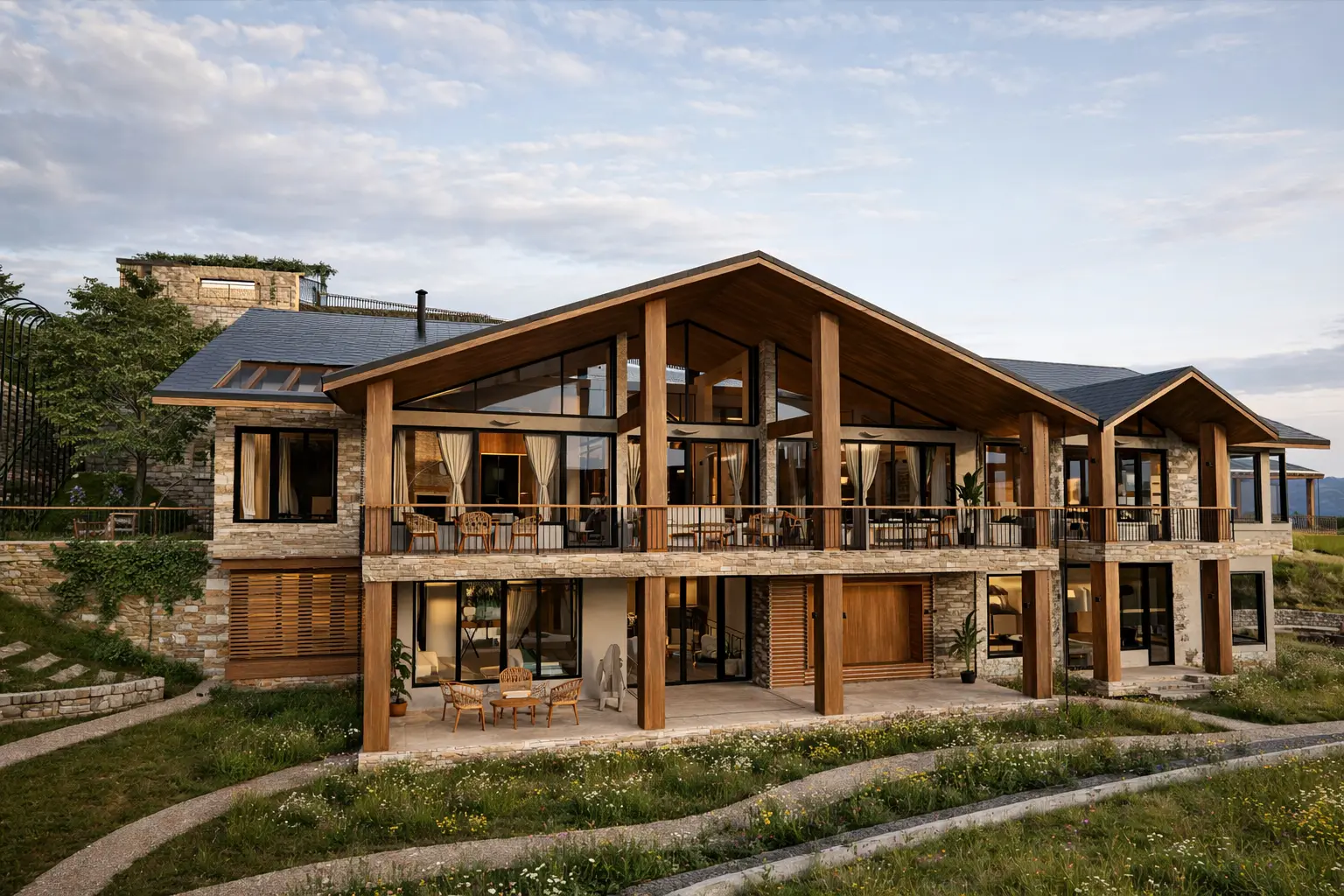
Luxury today is no longer about what is immediately seen, but what is deeply
experienced. In the world of luxury villa
design in Mumbai and across India,
the most refined homes are defined by restraint, clarity, and an almost
invisible precision. The focus has shifted toward privacy in architecture, calibrated proportions, and an
intuitive understanding of how spaces are lived in.
In dense urban environments like Mumbai, privacy in luxury homes becomes a powerful
architectural tool. Rather than creating isolation, the most compelling high-end residential architecture in India
uses layering to achieve seclusion. Transitional spaces, landscaped courts,
internal courtyards, and carefully framed openings allow for openness without
exposure. This approach to spatial planning
in luxury villas ensures that each zone unfolds gradually, offering
moments of pause, transition, and retreat. The result is a home that feels
inward-looking yet expansive, a rare balance in contemporary urban living.
Equally critical is the idea of proportion. In
modern luxury villa design,
scale is not about size alone but about how volume is experienced.
Double-height spaces are introduced with intent, often marking arrival points
or shared living areas, while more intimate zones are designed with a
human-centric sensitivity. This careful calibration defines high-end home design in Mumbai, where
grandeur is balanced with comfort. The interplay between expansive and
contained spaces creates a rhythm within the home, allowing it to feel both
impressive and deeply personal.
The seamless relationship between luxury interior design in India and
architecture is what elevates these homes further. Rather than being treated as
separate disciplines, interiors are conceived as an extension of the
architectural framework. Circulation flows intuitively, sightlines are
deliberate, and materiality is consistent across spaces. This integrated
approach to residential interior
architecture ensures that every element, from built forms to finishes,
contributes to a cohesive spatial narrative.
Comfort, in this context, becomes multi-layered. It is not limited to physical ease but extends to atmosphere and sensory experience. The use of natural materials, controlled lighting, and acoustic planning defines the essence of contemporary luxury interiors. Climate responsiveness, passive design strategies, and advanced systems further enhance this experience, creating environments that remain consistent and effortless throughout the year. Increasingly, smart home integration in luxury villas is designed to remain discreet, allowing technology to enhance daily life without dominating the visual language of the space.
What distinguishes the most thoughtful luxury homes in Mumbai today is this underlying spatial intelligence. Every decision, from zoning to detailing, is guided by how the home will be experienced over time. It reflects a deeper shift in luxury residential design in India, where the emphasis is on longevity, adaptability, and emotional comfort rather than visual excess.
In this new architectural narrative, luxury is quiet, deliberate, and enduring. It is found in the clarity of planning, the precision of proportion, and the subtle orchestration of spaces that feel both expansive and intimately personal.
